DuckDB 2.0.0 introduces major features like the Quack protocol and asynchronous I/O, along with many usability improvements such as a Python appender for efficient data insertion and enhanced CLI commands. For full details, visit the "What's New in the Docs for 2.0" page.
Related articles
See all→- Valkey

Testing without a server: using FakeValkey, the in-memory test double for Valkey
FakeValkey acts as an in-memory test double for Valkey, allowing developers to conduct tests without a real server. It simulates server behavior within the test process, providing a fast and efficient testing environment.
valkey.io·Added
- PostgreSQL

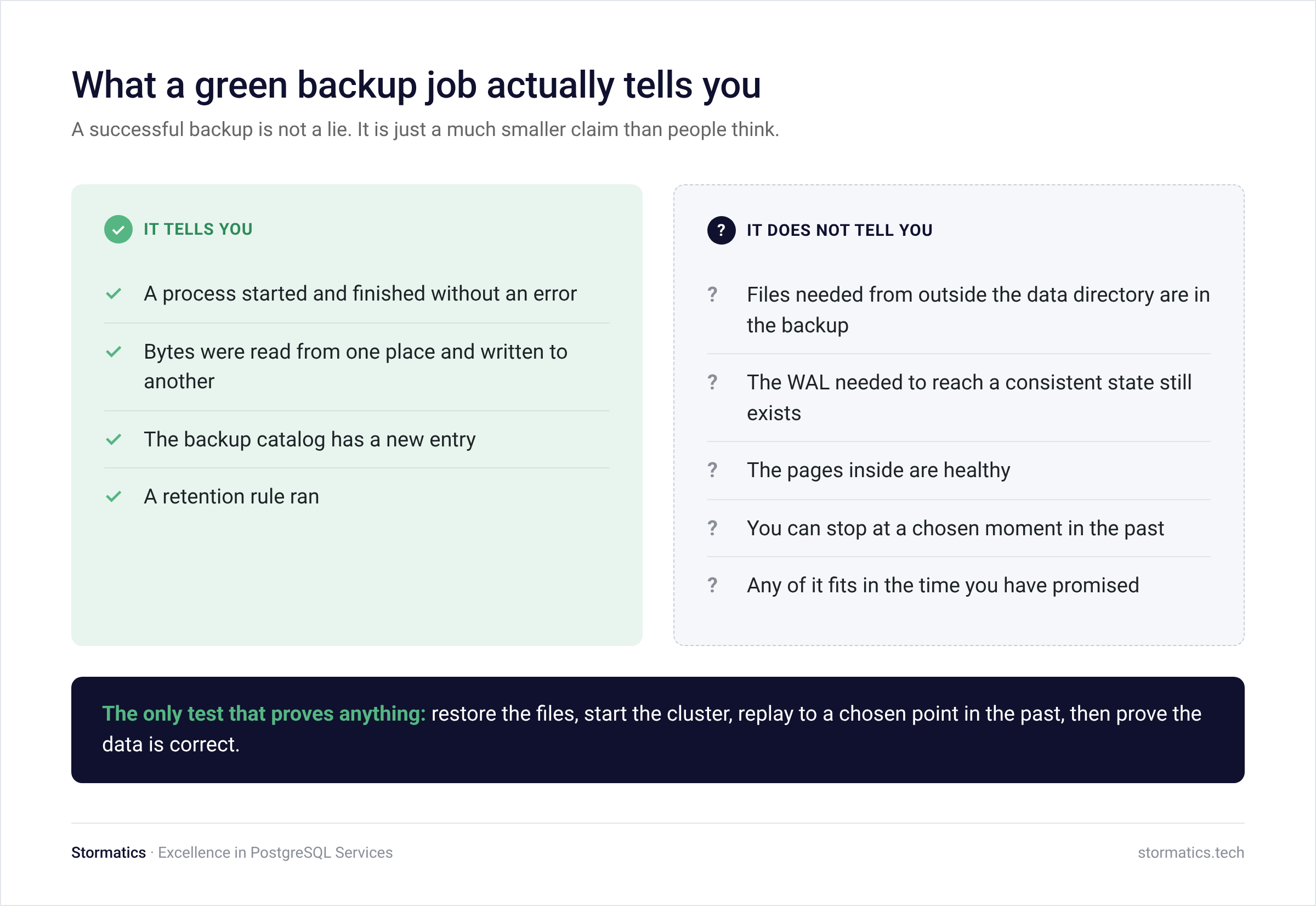
semab tariq: Your backups are green. That does not mean you can restore.
A successful backup does not guarantee the ability to restore. It's crucial to ensure that you can restore data when needed, by performing restore tests and monitoring all necessary components.
postgr.es·Added
- PostgreSQL
Vadim Yatsenko: Commit Sequence Number (CSN) MVCC: Lock-Free Snapshot Acquisition
CSN MVCC in PostgreSQL enhances performance by enabling lock-free snapshot acquisition, improving the efficiency of determining row visibility for queries.
postgr.es·Added
- PolarDB
Vadim Yatsenko: DataMax: A Dedicated WAL Log-Store Node for Near-Synchronous Durability
DataMax is introduced as a dedicated node for storing the write-ahead log (WAL) in PolarDB, providing near-synchronous durability. This allows clusters to maintain a pure copy of the WAL, which is crucial for systems requiring high coordination and data durability.
postgr.es·Added
- Image Storage

Three Ways of Storing and Accessing Lots of Images in Python
Real Python introduces PNG files, LMDB, and HDF5 as image-storage options. The available excerpt explains the motivation and CIFAR-10 setup, but does not include performance or disk-usage comparison results.
realpython.com·Added
- Publication
Using thousands of AI agents to uncover new leads in biological data
OpenAI, PerturbAI, and Scripps Research used distributed AI agents to analyze complex biological data, uncovering new research leads in brain cell data.
openai.com·Added